

A Practical Guide for Adult Children Helping an Aging Parent in Cape Coral, Bonita Springs & Southwest Florida
When an aging parent begins to need more support at home, adult children often find themselves facing a difficult question:
What kind of care does Mom or Dad actually need?
For families living out of state, the challenge can feel even greater. You may be trying to coordinate support from hundreds or thousands of miles away while balancing your own career, family, and responsibilities. Meanwhile, your parent may simply want to remain in the home they know and love.
Families in Cape Coral, Bonita Springs, Fort Myers, Estero, Naples, and throughout Southwest Florida have a variety of senior care options available. But not every type of service is designed to address the same needs.
Understanding the difference between home health nursing, non-medical companion care, and concierge lifestyle support can make it much easier to determine what type of assistance is appropriate for your loved one.
Home Health vs. Companion Care: They Are Not the Same

One of the most common misconceptions about senior care is that all in-home services are essentially the same.
They aren’t.
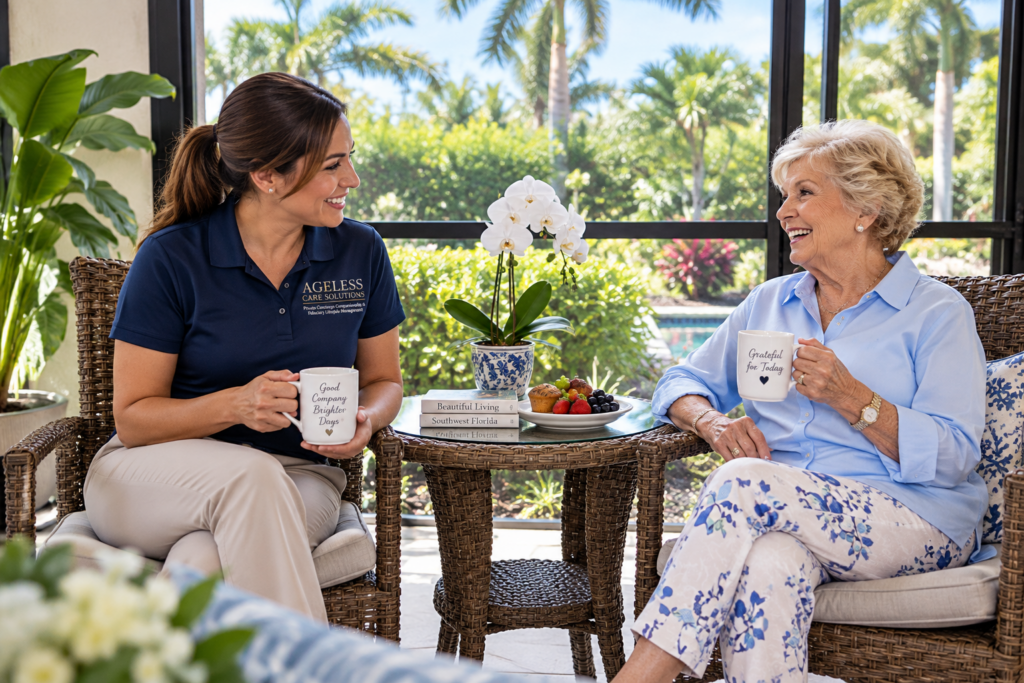
Home health care is generally focused on clinical and medical needs, while non-medical companion care focuses on the senior’s day-to-day quality of life, emotional well-being, engagement, and consistency.
Concierge lifestyle support can go one step further by helping manage the practical details of everyday life.
For some seniors, one category may be sufficient. For others, a customized combination of services may provide the most meaningful support.
What Is Home Health Care?
Home health care is designed to address clinical or medical needs in the home.
Depending on the individual’s condition and care plan, home health professionals may provide services such as:
- Skilled nursing
- Medication-related clinical assistance
- Wound care
- Physical, occupational, or speech therapy
- Clinical assessments
- Certain medical procedures
- Assistance with physical patient transfers
- Other medically necessary services prescribed or coordinated through a healthcare provider
Home health nursing is an important resource for seniors recovering from illness, surgery, injury, or managing certain medical conditions.
However, clinical care isn’t necessarily the answer to every challenge an older adult faces at home.
A senior may be medically stable but still feel isolated, anxious, bored, or overwhelmed by everyday responsibilities.
That’s where non-medical companion care can play an important role.
What Is Elite Companion Care?
Companion care focuses on the person—not just the medical condition.
For an aging senior, maintaining emotional well-being and a sense of normalcy can be just as important as having access to appropriate medical services.
Elite companion care may focus on creating a dependable presence and helping seniors continue to enjoy their routines and surroundings.
Emotional Well-Being
Regular companionship can help reduce the sense of isolation that some seniors experience, particularly when family members live outside Southwest Florida.
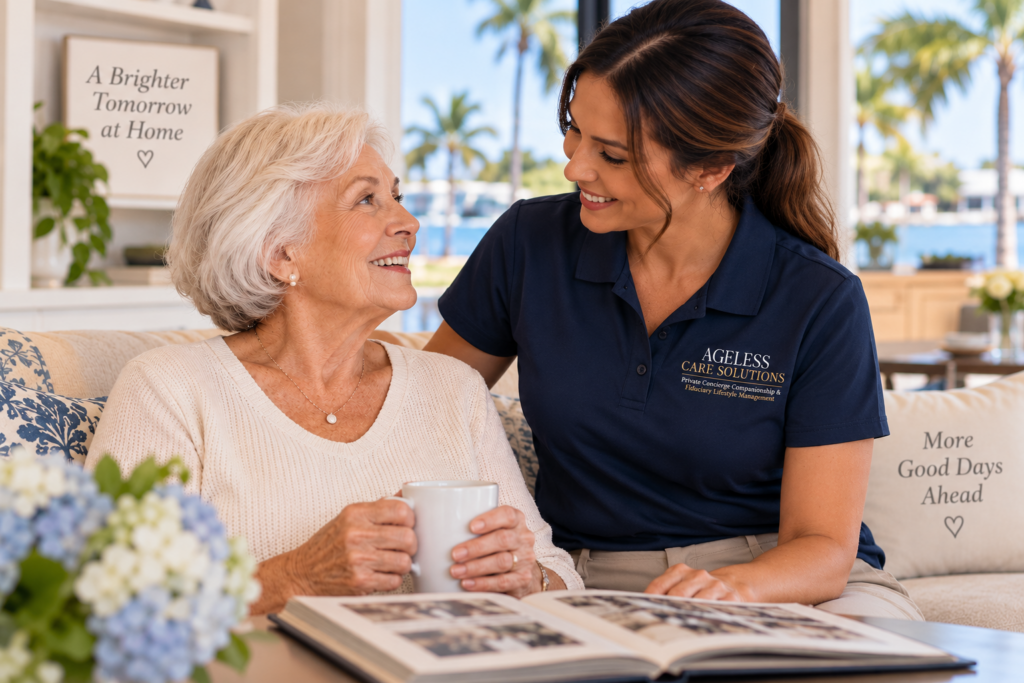
A familiar companion can provide conversation, encouragement, social interaction, and simply another friendly face throughout the day.
Cognitive Engagement
Meaningful interaction can help seniors stay engaged with the world around them.
Depending on the individual’s interests and abilities, companionship may include:
- Conversation
- Reading
- Games and puzzles
- Hobbies
- Walks
- Music
- Social activities
- Looking through family photographs
- Other personalized activities
The goal isn’t simply to “keep someone busy.”
It’s to create meaningful human connection.
Dementia Companionship
Families caring for a loved one experiencing memory-related changes may also benefit from consistent companionship.
A familiar routine and a calm, dependable presence can help create a greater sense of comfort and familiarity.
Companion care is not a replacement for medical treatment or skilled nursing. Instead, it can complement appropriate clinical services by addressing the social, emotional, and lifestyle needs that medical care may not be designed to provide.
Routine Consistency
For many seniors, routines provide comfort.
Knowing that someone dependable will arrive, share a meal, help with everyday activities, or simply spend time with them can make the day feel more predictable.
For adult children living out of state, consistency can also provide reassurance that someone local is paying attention.
What Is Concierge Lifestyle Support?

Senior care isn’t always about traditional caregiving.
Sometimes the greatest challenge is simply managing everything that needs to get done.
This is where concierge lifestyle support can become especially valuable.
A senior may be perfectly capable of living independently but find certain errands, household logistics, or meal preparation increasingly tiring or inconvenient.
Concierge support can help with the practical details that keep everyday life moving smoothly.
Services may include:
Local Household Logistics
Managing everyday household needs can become increasingly difficult with age.
Concierge lifestyle support may help coordinate or handle appropriate local logistics so your loved one doesn’t have to manage everything alone.
Meticulous Errand Execution
From picking up everyday necessities to handling local errands, having a trusted person available can eliminate unnecessary stress.
For an adult child living outside Florida, this can also mean fewer last-minute requests to coordinate from afar.
Fresh Meal Preparation
Eating well is an important part of maintaining quality of life.
Personalized meal preparation can help seniors enjoy fresh meals while reducing the burden of planning, shopping, and cooking.
Personalized Grocery Sourcing
Sometimes it’s not enough to simply “get groceries.”
Your loved one may have favorite foods, preferred brands, or a specific shopping routine.
Concierge lifestyle support can accommodate those preferences, including sourcing groceries from familiar local markets such as Publix or Whole Foods, when appropriate.
The objective is simple:
Make everyday life easier without taking away your loved one’s independence.
Which Type of Senior Care Does Your Parent Need?
The answer isn’t always obvious.
Consider the difference:
| Need | Home Health | Companion Care | Concierge Lifestyle Support |
|---|---|---|---|
| Skilled nursing | ✓ | — | — |
| Clinical medical care | ✓ | — | — |
| Physical patient transfers | ✓* | — | — |
| Social interaction | — | ✓ | ✓ |
| Emotional companionship | — | ✓ | ✓ |
| Cognitive engagement | — | ✓ | ✓ |
| Dementia companionship | — | ✓ | ✓ |
| Routine consistency | — | ✓ | ✓ |
| Local errands | — | — | ✓ |
| Grocery sourcing | — | — | ✓ |
| Fresh meal preparation | — | — | ✓ |
| Household logistics | — | — | ✓ |
*Specific services and transfer assistance depend on the provider, the senior’s condition, and the applicable care plan.
The important takeaway is that these services serve different purposes.
A senior receiving home health services may still benefit tremendously from companionship.
Likewise, someone who doesn’t require skilled nursing may still need significant help with meals, errands, household logistics, social engagement, or maintaining a consistent routine.
Why This Matters for Adult Children Living Out of State
When you’re several states away, it’s easy to feel like you’re constantly trying to fill gaps.
You may find yourself:
- Calling your parent multiple times a day
- Arranging grocery deliveries
- Coordinating appointments
- Searching for local service providers
- Asking neighbors to check in
- Worrying about whether your parent is eating properly
- Wondering whether they’re lonely
- Trying to determine whether something has changed
- Traveling back and forth to Southwest Florida whenever a concern arises
This can become exhausting.
More importantly, your parent may not want their children to feel responsible for every little thing.
A trusted local care and lifestyle support relationship can create a valuable middle ground.
Your loved one can maintain as much independence as possible while having a dependable local resource available when needed.
Aging in Place Doesn’t Mean Aging Alone
For many seniors, staying at home represents much more than convenience.
Home is where their memories are.
It’s where they know the neighborhood, their favorite restaurants, their routines, their belongings, and the people around them.
The goal of appropriate non-medical support isn’t necessarily to change that.
Instead, it can be about making aging at home safer, more comfortable, more connected, and more manageable.
That distinction matters.
The right support should feel personalized rather than institutional.
It should respect the senior’s preferences, routines, dignity, and independence.
A Personalized Approach to Senior Support in Southwest Florida
There isn’t a single care model that works for every family.
One senior may need skilled nursing following a medical event.
Another may be physically independent but experiencing loneliness.
Another may need help keeping the refrigerator stocked, preparing fresh meals, handling errands, and maintaining a familiar daily routine.
And some seniors may benefit from a combination of companion care and concierge lifestyle support alongside appropriate medical services.
The most effective approach begins with understanding what your loved one actually needs—not simply choosing the most obvious category of care.
The Bottom Line
If you’re an adult child trying to determine the right type of support for an aging parent in Cape Coral, Bonita Springs, Fort Myers, Estero, or surrounding Southwest Florida, start by separating medical needs from lifestyle and companionship needs.
Home health nursing addresses clinical care.
Elite companion care addresses emotional well-being, cognitive engagement, social connection, dementia companionship, and routine consistency.
Concierge lifestyle support addresses the practical details of everyday life, including local errands, household logistics, fresh meal preparation, and personalized grocery sourcing.
Understanding these distinctions can help families make more informed decisions—and help seniors receive support that actually matches their individual needs.
Helping Your Loved One Age in Place Gracefully
Most families find that an unhurried, customized blend of companionship and concierge care is exactly what their loved ones need to age in place gracefully.
If you’re concerned about an aging parent living in Southwest Florida—or you’re simply beginning to explore your options—Ageless Care Solutions LLC can help you understand what personalized non-medical support may look like for your family.
Contact Ageless Care Solutions LLC today for a private, 24/7 safety consultation.